
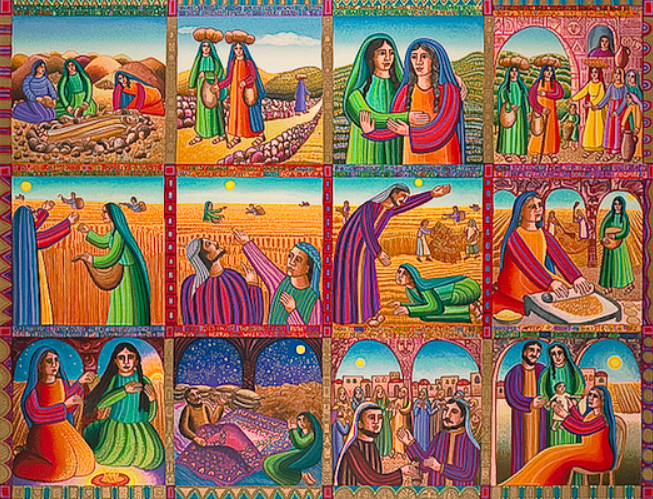
Artwork: The Story of Ruth, by John August Swanson
One of the things I love about Advent is reading through the Advent and Christmas narratives again. Most of us do not linger over the long genealogy of Jesus in Matthew, yet the season of Advent calls us to pause, to watch, and to discern how God works in the world, often in unexpected ways. The season of Advent invites us to see more than waiting for the day we celebrate the birth of the Messiah; it is about how God reshapes lives, redeems shame, and creates belonging in the most unlikely of places.
Belonging and Identity
Belonging is a fundamental human longing. It extends beyond membership in a club, a family, or a cultural community, it is about being seen, valued, and safe. Belonging is not about becoming a “cookie cutter” version of others in order to fit in, rather, it is about being accepted, loved, and respected for who we are. As theologian Miroslav Volf argues in Exclusion and Embrace, Christian inclusion doesn’t erase difference, it honours it, welcoming our distinct identities into belonging. When we belong, we feel included, connected, and able to flourish, becoming our full selves without fear of judgment. Conversely, exclusion or alienation can induce anxiety and make life feel fragile and precarious. Advent declares that God’s incarnation as a vulnerable infant overturns old boundaries and inaugurates a new kind of family. God gathers a Kingdom people whose belonging is not determined by status, ethnicity, or perfection, but by His gracious call to come and be part of His story.
Ruth’s Courage and Faith
Ruth’s own story begins amid a crisis. A Moabite widow among Israelites, she and her mother-in-law Naomi faced grief, poverty, and vulnerability. In her courageous choice to remain with Naomi, we glimpse a path of faithful preparation and the possibility of peace in the midst of uncertainty, one that reflects the Advent call to readiness and trust. Ruth declares, “Where you go I will go, and where you stay I will stay. Your people will be my people, and your God my God” (Ruth 1:16, NIV), exemplifying radical faith and loyalty. In this choice, she models a profound kind of belonging rooted in love, commitment, and an orientation toward righteousness and trust in God.
What must it have been like for Ruth, navigating a foreign culture while seeking to honour both her past and the people she had chosen to be with? In a patriarchal context where she had little protection, she risked security, reputation, and comfort. Yet she chose a different kind of belonging, one rooted not only in loyalty to Naomi but in a growing faith in the God of all creation. It took courage to step into this unknown, daily negotiating her identity as a Moabite while embracing a new community and a new God.
Boaz: A Man Shaped by Redemption
Ruth’s story is inseparable from that of Boaz, her kinsman-redeemer. Boaz demonstrates integrity, justice, and generosity, ensuring Ruth’s protection and provision. More than a moral actor, Boaz is the product of God’s redemptive work in his own family. His mother, Rahab, a Canaanite woman from Jericho who likely lived as a prostitute on the margins of society, risked her life to assist the Israelites. Rahab’s narrative is one of transformation: shame turned into honour, fear into faith, and inclusion into God’s family (Joshua 2; Matthew 1:5). Boaz grew up witnessing her experience of marginalization and redemption. Consider the influence this must have had – what conversations and modelling of faith occurred around the family table? This context shaped Boaz into a man attuned to the vulnerable, responding with compassion and justice.
The Extraordinary Genealogy of Jesus
Consider the genealogy itself: a foreign widow, a Moabite woman, and the son of a former prostitute all converge in the lineage of Jesus, the Son of the living God (Matthew 1:1–16). Advent reminds us that God is not constrained by our past, our background, or our social status. God takes what is broken, overlooked, or marginalized and weaves it into a greater narrative. As N. T. Wright reminds us, “the work of salvation, in its full sense, is about whole human beings, and about what God does through us.” The strange, messy ancestry leading to Jesus, the Messiah, invites us to see how God often weaves redemption through ordinary, broken human lives in hidden ways.
Ruth’s Agency and Identity
While Boaz exemplifies God’s redemptive power through family formation, Ruth demonstrates the power of human agency and faithful choice. Ruth always maintained her Moabite identity. She is called Ruth the Moabite throughout the story, reminding us that God values her background and ethnicity. This belonging wasn’t assimilation but integration into Israelite society through courageous, informed decisions. Her actions are not blind obedience, they are guided by discernment, faith, and commitment. Ruth reminds us that belonging in God’s family requires bringing our whole selves and trusting in the One who made us.
A Radical Vision of Family
The story of Ruth, Naomi, Boaz and Rahab presents a radical vision of family and belonging that transcends ethnicity, social status, and personal history. Naomi and Ruth, despite differences in age, nationality, and religion, chose relationship over cultural expectations. Boaz, shaped by Rahab’s story, becomes a person who protects, redeems, and honours. Through these interactions, God reveals that family in His Kingdom is defined not by human measures, but by love, justice, mercy, redemption, and life-altering transformation.

Artwork: Ruth and Naomi, by Chana Helen
Advent Invitation an Practical Engagement
Ruth’s inclusion in Jesus’ genealogy invites us to consider what it means to belong to God and to one another. How can we extend belonging to the vulnerable, marginalized, or different members of our communities, especially during Advent and Christmas? This inclusion is not meant to be tokenistic or seasonal; it needs to be a lived Kingdom value throughout the year.
God’s invitation is radical, defining Kingdom family, not by DNA, status, or perfection but by grace and redemption. As Dennis Edwards writes in Might from the Margins, “Those who have been oppressed are the best teachers of the way of Christ.” We are called to elevate their voices, to learn from their stories, and to witness God’s amazing work in and through them.
Advent proclaims this truth boldly: God can weave the most unlikely people into His family, and He delights in doing so.
As we anticipate and remember Jesus’ birth, and look forward to His promised return, we are invited to participate in the ongoing miracle of God’s redemptive love, opening our hearts to include, belong, risk, and welcome others.
Take a few minutes at the start of this Advent week to reflect:
-
Was there ever a time I felt like I didn’t belong? Name the moment(s) and emotion and bring this to God.
-
When have I felt accepted, welcomed, or included? Notice the context and emotions and give thanks to God.
-
How do the stories of Ruth, Naomi, Boaz, and Rahab remind me that God can bring belonging even in unexpected places?
Daily Practices (5 minutes each day):
-
Who in my circle might need to feel seen, valued, or included today?
-
What small act of connection, perhaps an invitation, a note, or a conversation, can I offer this week?

Artwork: Ruth and Naomi, by He Qi
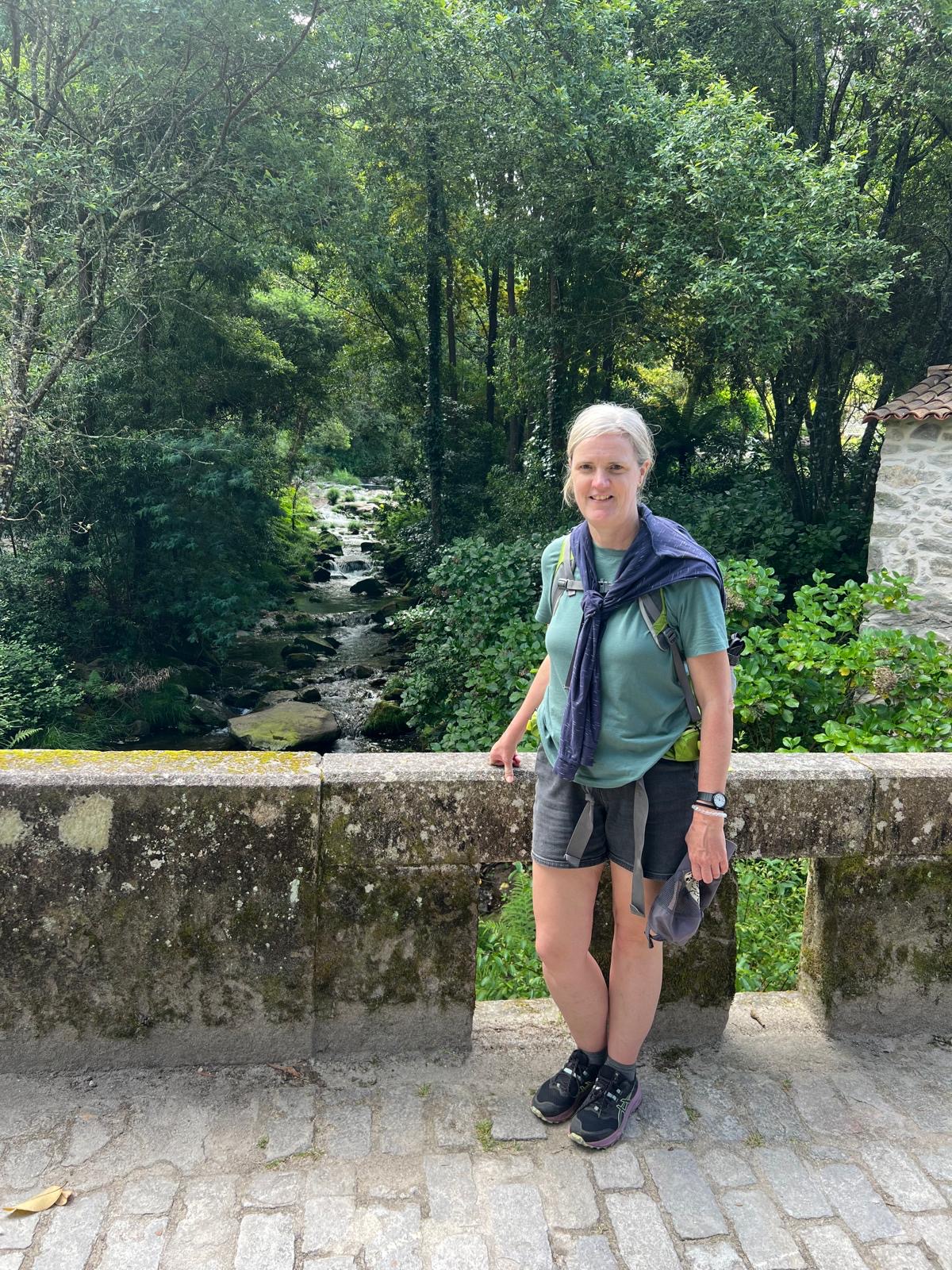
Dawn is a pastor, teacher, and justice advocate shaped by community, presence, and God’s heart for those on society’s margins. She spent eight formative years in South East Asia with St. Stephen’s Society before settling in Vancouver over twenty years ago.
She helped plant Strathcona Vineyard Church and has served as lead pastor for almost two decades, guiding a diverse community committed to hospitality, reconciliation, and neighbourhood flourishing. Dawn partners with Regent College through supervised ministry and by nurturing theological reflection with graduate students. She also serves on the Vineyard Canada National Team, resourcing churches in justice and reconciliation. She loves walking, hiking, swimming, reading, cooking for friends, and supporting Liverpool Football Club.