
Have you ever heard of Eastertide?
For many of us, especially those who grew up in more evangelical spaces, the Church calendar wasn’t something we followed closely. Easter was a day, an important one, but once it passed we moved on. And yet, in the historic rhythm of the Church, Easter is not just a day. It is a season.
Eastertide is the fifty-day season in the Church calendar that begins on Easter Sunday and extends to Pentecost. Rather than a single moment of celebration, it is a sustained season of joy in which the Church lives into the reality of the resurrection. Marked by rejoicing, reflection, and expectancy, Eastertide invites us to dwell in the risen life of Christ as we anticipate the outpouring of the Spirit.
Eastertide is not the echo of Easter’s joy; it is the deepening of its reality.
For fifty days, we are invited to dwell within what the resurrection means, not merely that it happened. The risen Christ is not a return to life as it was, but the unveiling of life as it now is, transformed, indestructible, and alive in the presence of God. In His resurrection, the renewal of all things has begun. This is not resuscitation; it is new creation.
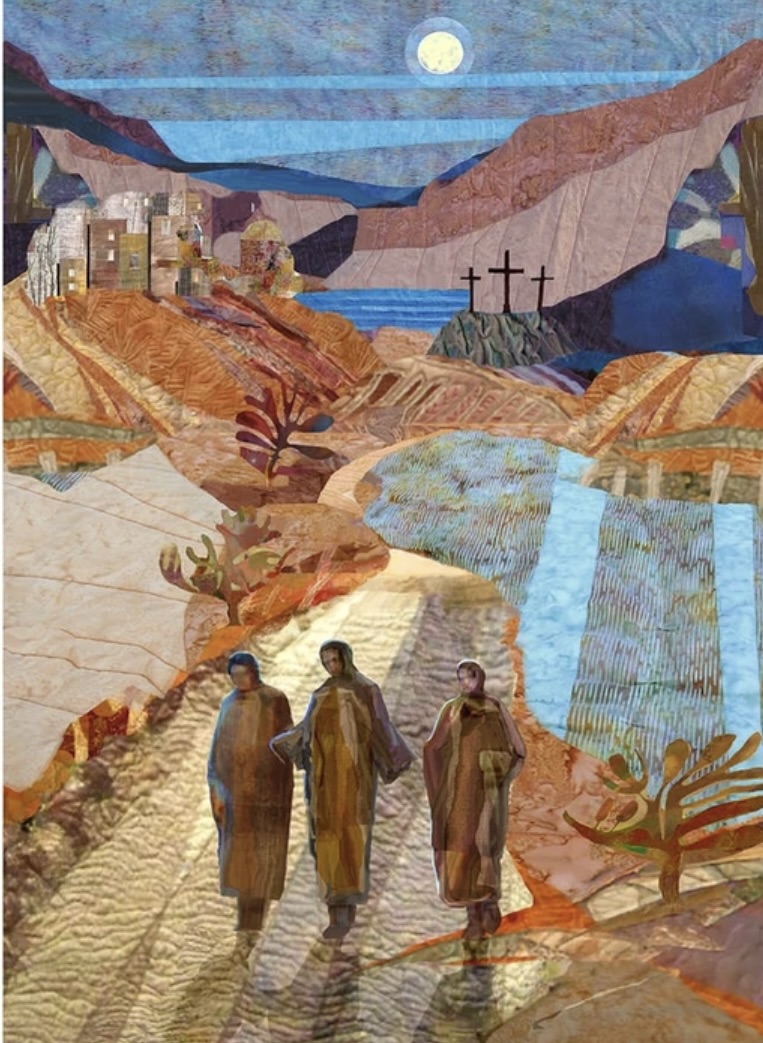
Throughout Eastertide, the Church reflects on the post-resurrection appearances, moments where Jesus feels familiar, yet strangely other. At times He is recognized in an instant; at others, He is not. On the road to Emmaus, He walks with His disciples as a stranger, only to be made known in the breaking of bread. In the garden, Mary mistakes Him for the gardener until He speaks her name. The Crucified One stands among them, still bearing His wounds, wounds through which salvation has come. And He does not withhold those wounds, but offers them to Thomas, meeting his doubt with invitation. He eats with His friends, grounding resurrection in embodied reality, and yet He is no longer bound in the ways we have known. These are not incidental details; they are theological revelations that unveil the beginning of new creation. In Him, we see not only who Jesus is, but what resurrected humanity, and ultimately all creation, is destined to become.
This is the quiet but staggering claim of Eastertide: that resurrection is not only something that happened to Jesus, but something that is happening through Him.
The Apostle Paul names this mystery as participation, that we have been buried with Christ and we are raised with Him into newness of life. Resurrection, then, is not only future hope; it is present reality. It is the slow reordering of our desires, the healing and mending of what was fractured and broken, and the awakening of a life hidden with Christ in God.
And yet, Eastertide is patient with us.
Because resurrection life often feels ambiguous. We still carry wounds. We still walk through uncertainty. Like the disciples, we find ourselves somewhere between disillusionment and renewed hope. Faith, in this season, is not triumphant certainty; it is slow recognition. It is learning, again and again, to see the risen Christ in the breaking of bread, in the speaking of peace, and in the calling of our name.
Eastertide teaches us to live in that tension, between what has been accomplished and what is still being revealed, between the now of resurrection life already begun and the not yet of its fullness still to come.
So we become a people who do not rush past resurrection, but dwell within it.
A people who trust that the life of the age to come has already begun.
A people who are learning, slowly and faithfully, to live into the life that death cannot undo.
And so we are left not with answers alone, but with an invitation, to pay attention, to remain open, to look again.
For the risen Christ is not absent, only sometimes unrecognized.
And Eastertide teaches us to see.
Author: Tina-Marie Axenty